


Merge Hope: Build & Story
3.856.00 Reviews
App Specs
- Version
- 1.0.0.8
- Updated On
- License
- Free
- Downloads
- 50,000+
- Developer
- 37GAMES-GLOBAL-ENTERTAIN
- Categories
- Puzzle
- Platform
- Android
Screenshots
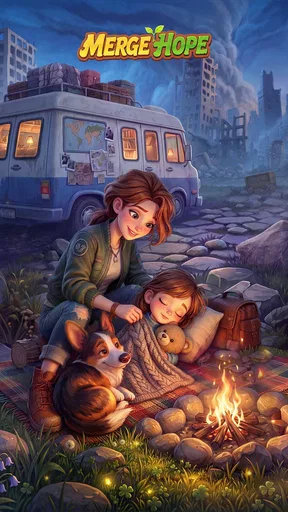
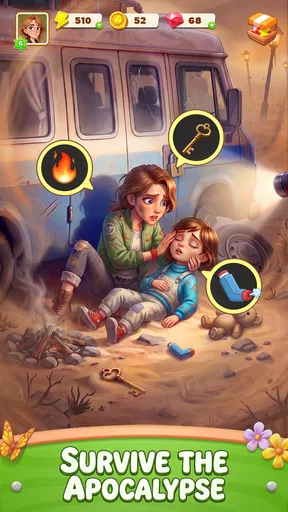
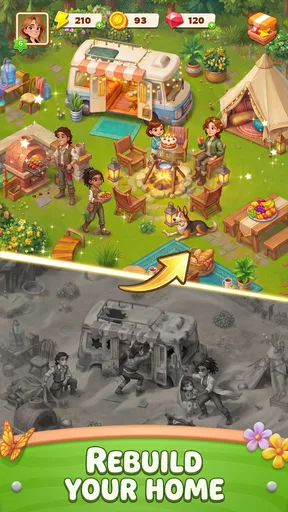
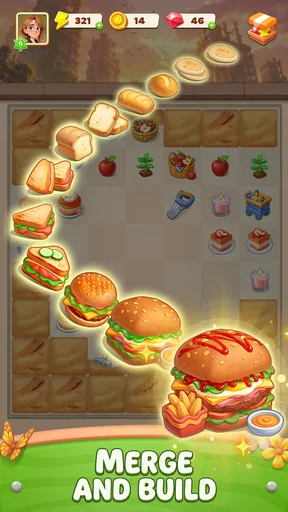


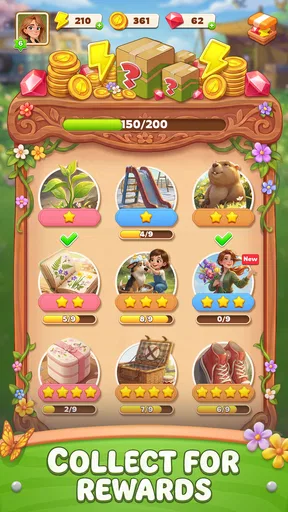
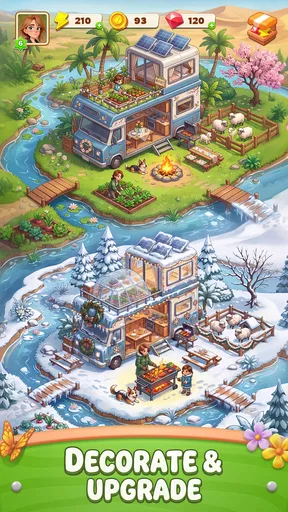
 Analysis by AppCompare
I spent time with Merge Hope: Build & Story as a casual puzzle game, and my first impression was that it aims for a gentler kind of progress than a fast, score-chasing puzzler. Its central idea is easy to understand: combine matching items, use the results to move a damaged setting forward, and let the rebuilding provide the reason to keep playing. That combination makes it more approachable than a puzzle that only offers a high score at the end of each session.
The game is free to start, is suitable for Everyone, and comes from 37GAMES-GLOBAL-ENTERTAIN. It is listed in the puzzle category, with a 3.8 average from around 180 ratings and over 50 thousand installs. Those figures suggest a modest but established audience rather than a huge community, so I approached it as a personal, low-pressure game instead of expecting a constantly changing social experience.
How the rebuilding loop feels in everyday play
The appeal is strongest when I want something that can be played in short bursts. I can open it, look at the board, make a few combinations, and feel that the session has produced visible progress. The rebuilding theme gives each move more purpose than simply clearing pieces. Even when the puzzle itself is familiar, the promise of improving the surrounding home helps make the next task feel worthwhile.
That makes it a natural fit for small gaps in the day. I could imagine playing while waiting for an appointment, during a quiet commute, or in the evening when I want a game that does not demand constant concentration. It is also a reasonable choice for someone who enjoys organizing and upgrading spaces but does not want a full simulation game with complicated controls.
The important distinction is that this is not best viewed as a traditional logic puzzle with one carefully designed solution. The pleasure comes from managing combinations and turning them into a longer rebuilding journey. If you enjoy watching a place gradually become more complete, the structure has a clear emotional payoff. If you prefer difficult riddles, strict deduction, or competitive leaderboards, the construction layer may feel more interesting than the puzzle challenge itself.
Why the theme matters more than it first appears
The “home” idea changes how I judge mistakes. In a pure matching game, a weak move can feel like wasted time. Here, the broader restoration goal makes ordinary progress feel useful, even when a particular board is not especially demanding. I found that helpful during tired sessions, because I did not need to be in a highly competitive mood to enjoy the result.
There is also a practical advantage to this design: the game gives players a reason to return without requiring them to memorize a complicated rule set. Once the basic merge behavior is understood, attention can shift toward planning the next useful combination and deciding when to spend available resources. That simplicity is a strength for casual players, although it can become a weakness for people who want increasingly technical puzzles.
Worth Reading Before You Choose

Baby Panda World Brings Quick Play to Modern Phones, but Its Game Library Feels Busy

ESPN’s Live Game View Makes Following Close Games Easier

QuizzLand Review: A Good Fit for Short Trivia Breaks, Not Every Player

Basketball Stars: Multiplayer Is Fast, but Can It Recover When Matches Go Wrong?

WEBTOON Turns Phone Updates Into a Better Reading Routine

Link to Windows Runs on Shared Habits, Not Social Feeds
A better way to approach each board
My most useful habit was to pause before making the first obvious combination. In merge games, an available match is not always the best match. I found it more sensible to scan the whole board, identify which items are blocking space, and consider whether a small combination will open room for a more valuable chain. This is a simple change, but it prevents the board from becoming crowded too quickly.
I also recommend treating space as a resource rather than merely a place to store pieces. When several low-level items are left scattered around, future combinations become harder to see. Grouping similar items and preserving a clear area for new pieces makes the board easier to read. This is one of the less obvious skills in the game: the best move is often the one that improves the next three moves, not the one that produces the largest immediate result.
A second useful approach is to separate progress goals from clearing goals. Sometimes I wanted to complete a rebuilding task quickly, but the better decision was to create a chain that would leave the board in a healthier state. That trade-off matters for players who tend to tap every possible match. Fast actions feel satisfying, yet careful preparation usually gives a smoother session.
What the current version tells me
The current version is 1.0.0.8, while the listed release date is June 3, 2026. I see that as an early point in the product’s life rather than a sign that the game is already a mature, feature-heavy platform. The version number indicates that the developer has made at least some iterative progress beyond the starting build, but it does not by itself prove a particular feature or redesign, so I would judge the game mainly by how comfortable the present loop feels.
For someone installing now, that early-stage position has two sides. The positive side is that the central concept is easy to learn and does not feel burdened by years of accumulated systems. The less comfortable side is that players who expect a deep, expansive puzzle world may find the experience more limited than long-running alternatives. I would approach it as a focused rebuilding puzzle, not as a replacement for every type of casual game.
The minimum operating-system requirement is Android 7.0, which keeps the game accessible to many older Android devices. That is useful if you are playing on a spare phone or an older handset rather than a recent flagship. I would still keep expectations realistic: broad compatibility does not automatically mean identical smoothness on every device, especially when a game keeps adding visual elements as the home develops.
How existing players may experience its evolution
Players who started near the beginning may appreciate the straightforward identity of the game. The core promise is easy to recognize, and the current build does not need a long explanation before the first meaningful action. For returning users, the main question is less about learning the controls and more about whether the rebuilding journey continues to feel rewarding after the novelty of the first improvements fades.
I would advise existing players to notice whether their enjoyment comes from the board decisions or from the visual sense of restoration. That distinction helps set expectations. If the board is the main attraction, small changes in pacing or item availability can affect the experience significantly. If the home-building progression is the main attraction, even familiar combinations may remain satisfying because they support a larger personal goal.
New players should not rush to judge the game after only a few quick moves. The first sessions mainly establish the rhythm: combine, manage space, complete a task, and use the result to continue rebuilding. The more revealing test is whether that rhythm fits your preferred way of relaxing. I found it more enjoyable when I played with patience instead of trying to force constant progress.
Where the game still asks for patience
The biggest limitation is the possibility of repetition. The merge formula is approachable because it is simple, but that same simplicity can make later sessions feel similar if the surrounding goals do not keep adding enough variety. Players who need a steady stream of new mechanics may lose interest sooner than players who enjoy a dependable routine.
Another point of friction is that the rebuilding theme can create expectations of a broad story or a detailed home-design system. I would not choose this game solely because I want a full narrative adventure or a highly flexible decorating tool. Its identity is rooted in puzzle progression first. The restoration setting supports the loop; it does not turn the game into a complete interior-design simulator.
The free entry is convenient, but optional purchases range from $0.99 to $99.99 per item. That wide range deserves attention before spending. I would begin without buying anything, learn how quickly the ordinary loop satisfies me, and decide only after I understand whether purchases solve a genuine frustration or simply shorten a part of the progression. For a casual game, keeping a personal spending limit is especially sensible because small individual purchases can become less small when repeated.
This is also where the game may not be right for everyone. If you dislike in-app purchase systems on principle, a paid puzzle with a single upfront cost may be a better fit. If you want a completely offline-feeling, no-pressure experience, you may prefer a minimalist puzzle app that focuses only on solving boards. Merge Hope: Build & Story is more suitable for someone who enjoys the motivation of a longer restoration journey and is comfortable deciding whether optional spending belongs in that experience.
Three practical habits that improve the experience
- Protect open space. I try not to fill every available position with low-level pieces. Leaving room for new arrivals makes later chains easier to recognize and reduces the temptation to make poor emergency merges.
- Use the home goal as a pacing tool. When I feel stuck, I stop chasing the biggest visible combination and focus on the next rebuilding requirement. That gives the session a concrete direction without turning every move into a frantic search.
- Delay spending decisions. Because the game is free to begin and purchases can be substantial, I would first test several ordinary sessions. This reveals whether the basic loop is enjoyable on its own and prevents a rushed purchase from deciding whether the game feels good.
These habits are not complicated, but they address the parts of the game that matter most in practice: board space, short-session planning, and control over the spending side of a free-to-play puzzle. They also make the game feel less random, because I am making choices for the next stage rather than reacting only to what is immediately visible.
How it compares with familiar puzzle alternatives
Compared with a match-three game built around quick rounds and high scores, this title feels more persistent. A match-three alternative is usually better when I want immediate action, clear turn boundaries, and a strong focus on short-term performance. Merge Hope: Build & Story is better when I want my actions to feed into a continuing restoration objective.
Compared with a pure merge game that emphasizes collection, this one has a warmer sense of direction because the home gives the activity a visible destination. The trade-off is that players seeking elaborate collection depth may find the rebuilding framing less flexible than a game designed around a large catalog of items and systems.
Compared with a traditional brain-training or logic-puzzle app, it is less about proving that I can solve a difficult problem and more about maintaining a useful chain of decisions. A logic app is the stronger option for focused mental challenges. This game wins when I want a softer experience that combines light planning with the satisfaction of restoring a place.
That comparison is important because the game’s category label alone does not explain its mood. It is a puzzle game, but not every puzzle player will want the same kind of reward. I would recommend it to people who like gradual visual progress, simple rules, and a home-centered objective. I would skip it in favor of a more demanding alternative if my priority were complex deduction, competitive scoring, or a one-time purchase with no optional spending.
Who should install it, and who should pass
I think it is a good candidate for casual players who enjoy organizing objects, making combinations, and watching a damaged setting improve over time. It also suits people who prefer games that can be paused mentally between sessions. The Everyone age rating makes it approachable for a broad audience, though younger players should still have guidance around optional purchases.
It is less convincing for players who need constant novelty. If repeating a familiar merge action quickly becomes boring for you, the home-rebuilding goal may not be enough to hold your attention. The same applies if your favorite puzzle games are built around exact solutions, timed pressure, or increasingly difficult logic. This is a progression-focused pastime, not a specialist challenge app.
For a realistic everyday scenario, I would use it after work when I have ten quiet minutes but do not want to begin a long game. I can make a few deliberate combinations, tidy the board, and stop after a small rebuilding objective. That kind of session feels more manageable than starting a competitive game where one mistake can ruin a round or where I feel pushed to continue.
What I would watch as the game develops
Because the current build is still early in its version history, I would pay attention to whether future development adds meaningful variety rather than simply extending the same chain. New kinds of decisions, more interesting restoration goals, or stronger reasons to revisit older areas would help the game stay engaging. I would also watch how the balance between ordinary progress and optional purchases develops, since that relationship strongly affects a casual player’s sense of comfort.
For existing users, the most valuable improvements would be the ones that reduce friction without removing planning. Clearer board organization, sensible pacing, and goals that reward preparation would support the game’s strongest qualities. Changes that merely accelerate every action could make the experience faster, but not necessarily better, because part of the appeal is choosing when to merge and when to wait.
I would also look for evidence that the story and rebuilding side continues to earn its place. The setting is most effective when it gives puzzle decisions emotional or visual context. If it becomes only a backdrop for repeated combinations, the game may feel closer to a standard merge title. If it keeps turning careful play into noticeable restoration, it can maintain a distinct personality.
My recommendation after playing
My overall view is positive but measured. Merge Hope: Build & Story has a clear, friendly concept and a useful place among relaxing puzzle games. Its strongest feature is not complexity; it is the way simple merging is tied to a visible rebuilding purpose. I enjoyed it most when I treated each board as a small planning exercise rather than tapping through every obvious match.
I would recommend giving it a try if you want a free puzzle game for short sessions and like the idea of rebuilding a home step by step. Start slowly, protect your board space, and postpone any purchase until you know the basic loop works for you. With the current version at 1.0.0.8, I would also keep expectations open: the foundation is easy to understand, while its long-term appeal will depend on how much variety and depth the developer adds over time.
My final advice is simple: install it for the calm restoration loop, not for demanding puzzle mastery. If that distinction matches what you are looking for, the game can become a pleasant daily habit. If you want intricate logic, rapid competition, or a completely purchase-free structure, another puzzle style will probably serve you better.
Pros
- Relaxing merge gameplay that is easy to learn and play at your own pace.
- Story-driven progression gives each restoration project a clear purpose.
- Regular tasks and objectives help keep sessions feeling structured.
- Colorful visuals make the rebuilt locations pleasant to explore.
- Suitable for short play sessions on most days.
Cons
- Energy limits can interrupt progress during longer play sessions.
- Some upgrades may require patience or repeated merging.
- The story may feel predictable for players seeking complex narratives.
- Limited challenge may disappoint experienced puzzle-game fans.
- Optional purchases can make faster progress more tempting.
FAQs for Merge Hope: Build & Story
What is Merge Hope: Build & Story about?
Merge Hope: Build & Story is a casual merge game that combines resource management, village restoration, and narrative progression. You merge matching items to create more advanced materials, then use those resources to rebuild locations and unlock new parts of the story. The game is designed for relaxed sessions, with simple controls and gradual objectives rather than fast reflex-based action.
How does the merging system work in Merge Hope: Build & Story?
The main gameplay involves combining two or more identical objects to produce an upgraded item. These materials can be used to complete tasks, repair buildings, and advance the surrounding community. As the board becomes busier, planning becomes important because limited space can make it difficult to organize items. Completing orders and objectives generally provides the resources needed for further restoration and story progress.
Can Merge Hope: Build & Story be played offline?
Some basic merging activities may remain accessible without a constant connection, but offline availability can vary depending on the feature being used, the version installed, and the device platform. Story updates, advertisements, cloud synchronization, events, purchases, and other online services may require internet access. For the most complete experience, it is best to launch the game while connected and check its current store description.
Is Merge Hope: Build & Story free to download and play?
Merge Hope: Build & Story can generally be downloaded and started without an upfront purchase, but it may include optional in-app purchases. These can be used for extra energy, boosters, resources, or other conveniences that help players progress more quickly. You can usually enjoy the core gameplay without paying, although waiting systems, limited resources, or advertisements may affect the pace of progression.
Is Merge Hope: Build & Story suitable for children?
The game uses approachable merge mechanics, colorful visuals, and story-focused objectives, making it accessible to many casual players. However, parents should review the age rating and the current content details before installation. Because the game may contain advertisements, in-app purchases, and online features, parental controls and purchase restrictions are recommended if children will be playing on a shared mobile device.


